Choosing a Robotic Laser Welding System is not simply a matter of comparing laser power, robot reach, and brochure claims. The right choice begins with the weld itself. Examine the joint design, material thickness, surface condition, production rate, and required tolerance. A stainless-steel enclosure needs different settings from a deep-penetration automotive component. Even small gaps can change the result.
Theodore Maiman, a pioneer of laser technology, famously said, “The laser is a solution looking for a problem.” His warning remains useful. Automation should solve a measurable manufacturing problem, not decorate an investment plan. A capable Robotic Laser Welding System must combine a stable laser source, accurate motion control, suitable optics, reliable fixturing, and process monitoring. Safety integration also matters, including guarded cells, interlocks, extraction, and trained operators.
Ask for sample welds using your actual materials. Inspect penetration, bead shape, distortion, and repeatability under production conditions. Request cycle-time data, maintenance requirements, software compatibility, and local technical support. A demonstration using perfect test coupons may look impressive. It may not represent your factory.
There is no flawless configuration. That is worth admitting.
A higher-powered laser can increase speed, yet it may demand better fixturing and tighter process control. A cheaper system can reduce initial cost, but limited service support may create expensive downtime. The most reliable decision balances technical performance, operator experience, future capacity, and total ownership cost. Review the evidence carefully. Then choose the system that remains predictable when the shop floor is not.
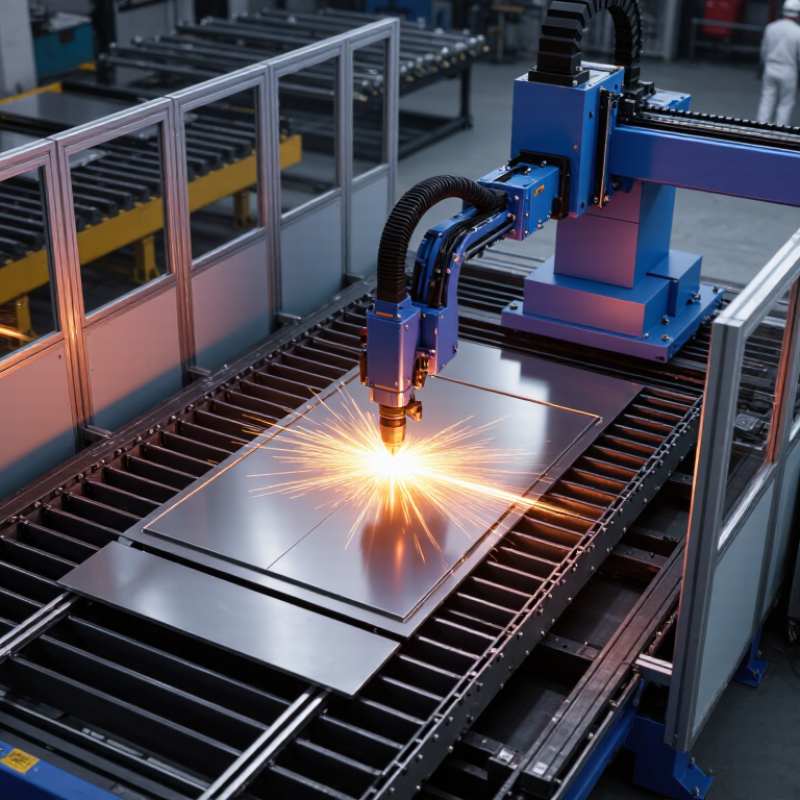
A suitable robotic laser welding system begins with a precise process definition. Record the material type, thickness, joint design, and expected weld length. Stainless steel, aluminum, and coated sheet behave differently under laser heat. Small gaps can also affect penetration and appearance.
Measure the required production rate using real cycle-time data. Include loading, clamping, welding, inspection, and repositioning. A system that welds quickly may still underperform if fixtures cause delays. Test sample parts with production-like tolerances. This often reveals problems that drawings hide. I have seen teams overlook cable movement and access angles. That mistake can create unexpected downtime.
Tips: Prepare several sample assemblies before choosing equipment. Check beam access, fixture repeatability, fume extraction, guarding, and operator visibility. Ask for recorded weld results, not only theoretical speed. Confirm that the system supports required safety functions and staff training. Keep a small allowance for maintenance and future product changes.
Define acceptable weld appearance and strength before comparing machine specifications. Decide how defects will be detected, such as visual inspection, dimensional checks, or non-destructive testing. Consider surface preparation too. Oil, oxidation, and inconsistent fit-up can reduce stability. Automation will not correct every upstream weakness. Sometimes, improving the fixture matters more than increasing laser power.
Fiber lasers suit many steel, stainless steel, and aluminum applications. They offer stable beam quality and efficient energy transfer. Higher power is not always better. Too much energy can distort thin sheet.
Larger or specialized workpieces may need another source type. Review optical maintenance, cooling, pulse control, and service access. The catalog rating is only a starting point. Real trials matter more.
Choose a fixed-focus head for consistent parts and repeatable joints. A scanning head can handle small path corrections and wider process windows. Check focal length and standoff tolerance. Also inspect sensing features and window replacement access.
A dirty protective window can reduce penetration quickly. This problem is easy to overlook. Test with actual joint gaps, not perfect sample plates. Small contamination can create large quality changes.
A six-axis arm suits complex assemblies and angled welds. A Cartesian system offers rigidity across large, flat work areas. Collaborative systems may fit lower-volume production. Check their speed and payload limits carefully.
Match robot reach to the fixture, not only the workpiece. Leave space for cable movement and maintenance. A compact cell may appear efficient. It can still create awkward service access.
Test the actual material, thickness, joint gap, and surface condition. Aluminum, copper, coated steel, and stainless steel absorb energy differently. Reflective metals may need tighter beam control. Oil and imperfect fit-up can change results.
Use cross-sections, tensile tests, leak tests, and visual criteria. Monitor power, travel speed, and penetration signals when possible. Calculate loading, clamping, welding, inspection, and unloading time. The fastest path may create more rework.
Review weld logs, calibration records, maintenance access, and sample cross-sections. Confirm operators can manage setup and quality checks. A clean trial part can mislead. I would approve only repeatable, acceptable welds.
Choosing the right Robotic Laser Welding System begins with clearly defining your production requirements, including workpiece size, material type, joint design, required output, and desired level of automation. Compare laser sources, welding heads, and robot configurations according to beam performance, positioning accuracy, flexibility, and compatibility with your existing workflow. It is also essential to evaluate how well the system handles your materials while maintaining consistent weld quality, penetration, appearance, and production speed.
Safety, automation, and integration should be assessed before making a final decision. Look for suitable guarding, monitoring, emergency controls, programmable functions, and compatibility with fixtures, sensors, software, and factory systems. Finally, calculate the total cost of ownership by considering equipment, installation, training, energy use, maintenance, spare parts, and future upgrades. A system with a higher initial price may provide greater long-term value if it improves productivity, reduces defects, simplifies maintenance, and supports changing production needs.